
Satsuki Azalea Bonsai
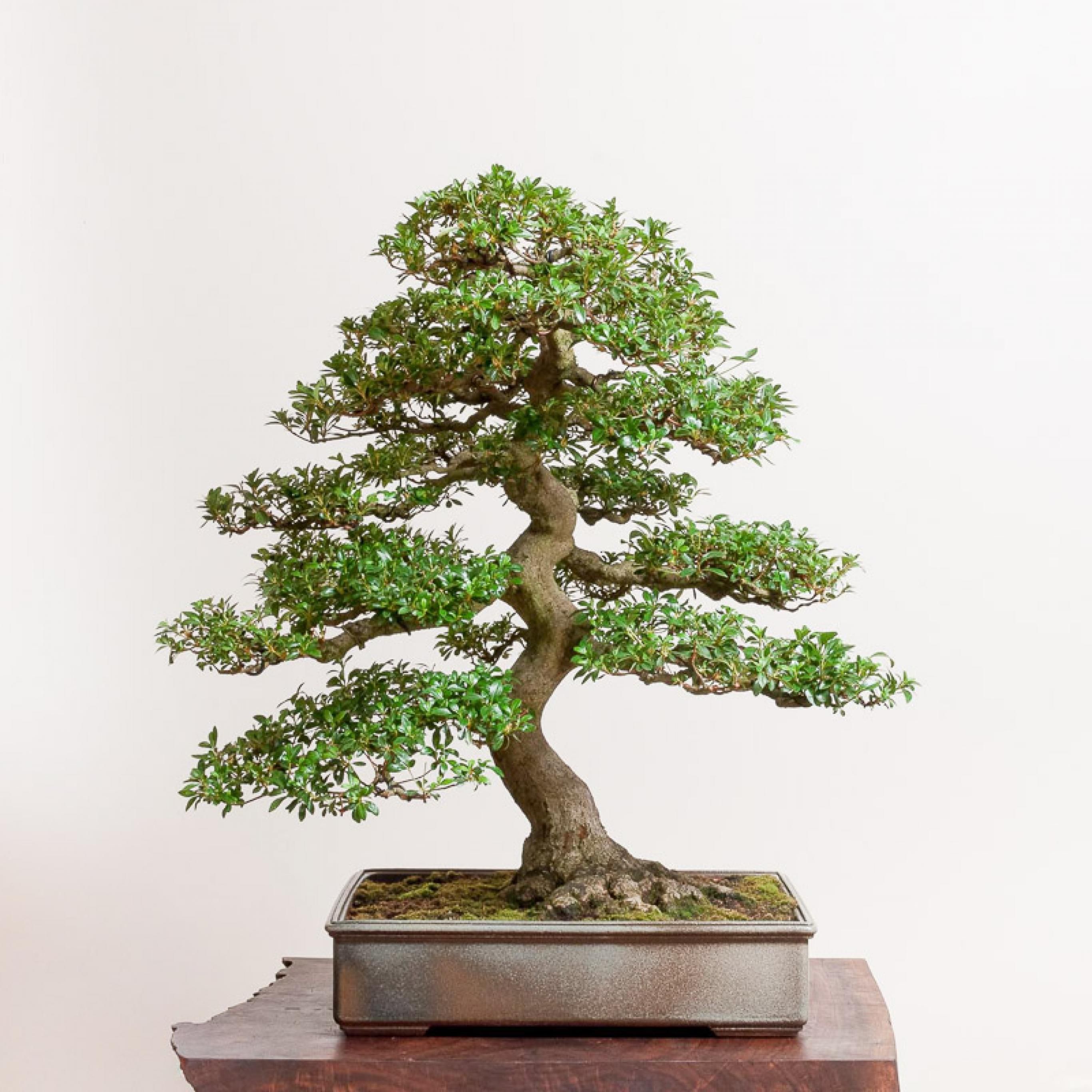
Satsuki Azalea Bonsai Inspiration

General Information
Satsuki azalea bonsai—Rhododendron indicum—are as iconic as a Japanese maple or Japanese black pine bonsai.
Satsuki azalea flowers can offer any color and combination of stripes and spots. Because of its flowering beauty and smooth, muscular-looking trunk, the Satsuki azalea is highly prized in the bonsai community. There are over three hundred varieties of hybrids and floral presentations that exist today.
However, the more hybridized Satsuki azaleas get, the more delicate, finicky, and short-lived they become. This is especially true with species like Kinsai spider flower Satsuki. They have a 60 to 80-year shortened lifespan based on their hybridization. Original strains like Kaho or Osakazuki have the capacity to live over one hundred years and maintain a tremendous amount of strength.
The Satsuki azalea is a basely dominant plant—which means it hinges on the shin (the area in the root system immediately under the trunk) being cared for from the very beginning of cultivation and maintained over time to preserve health. When Satsuki azalea bonsai lose health in the shin, their apex begins to become weak and fail. This can cause the Satsuki azalea bonsai to lose its capacity to become bonsai over time.

Caring for Satsuki Azalea Bonsai

Watering
Satsuki azaleas love water.
The fine root system that takes in moisture exists primarily in the upper 30% of the containerized environment where water-conductive roots exist. Satsuki azaleas benefit from periodic shallow waterings where the dry surface is hydrated but the tree is not thoroughly saturated and soaked in the watering.
Every other watering, thoroughly saturate a Satsuki azalea until water comes out of the drainage holes in the bottom. In between these waterings, only moisten the surface of the plant to hydrate the fine roots without saturating the shin or middle-to-bottom portion of the container to avoid water-related issues.

Sun Exposure
Over the spring and fall, Satsuki azalea bonsai need full sun to create strong flower buds with tight internodes and to build up the kind of resources that continue to perpetuate the species’ iconic floral display.
As a bonsai, Satsuki azalea has some of the greatest capacity to grow in partial, or even full shade in some varieties and cultivars. The larger the leaf and overall size of the Satsuki azalea bonsai, the more heat they can tolerate.
Regardless, all Satsuki azaleas need a shade cloth once you surpass 85 degrees and 30% shade.

Temperature
Satsuki azaleas will tolerate heat in excess of 100℉ with humidity and 90℉ with low humidity.
Satsuki azalea bonsai can tolerate minor frost and freezes. However, letting your Satsuki azalea completely freeze or endure temperatures below 28℉ is a roll of the dice when it comes to your tree responding in the confined environment of a bonsai container. Below 25℉, you will experience potential burning on the trunk branch loss and damage that will inevitably change the shape of the tree.

Fertilizing
Satsuki azalea bonsai enjoy organic feed. However, make sure you do not add too much, as this can create pockets of debris in the soil that can lead to root rot.
Moderate to wide applications of fertilizer is all that's necessary to keep Satsuki azalea bonsai growing strong.

Pruning
Satsuki azalea bonsai respond with a different kind of growth depending on when you prune them in the spring. Pruning is necessary to maintain the health of the tree. Lack of pruning will result in more woody twigging that conducts very little water and causes the branches to become more leggy and weak.
- Pruning in the early spring before the plant begins to grow will result in a few strong shoots emerging from the cut site.
- Pruning in the middle of spring right as the buds around the leaf mass begin to show their soft fleshy green new growth will result in a larger number of smaller, finer twigs around that cut site.
- Pruning later into spring when the azalea has a fully-produced leaf mass will result in an abundance of tiny weak shoots around that cut site.
If you have a fully refined Satsuki azalea and you want it to flower within the year, wait to prune until the tree begins to flower and remove the flower buds as you thin down the branches to a designed length.

Wiring
Wire can be used to train the shape and growth of a Satsuki azalea. Wiring should be placed with care due to the delicate nature of the Satsuki azalea bonsai.

Repotting
Satsuki azaleas are typically cultivated in a specialty soil called Kanuma, which is an incredibly soft, acidic, volcanic soil. This soil accommodates the fine, soft, steel wall-like root system that Satsuki azaleas utilize for their water conductivity and nutrient uptake.
Here’s a breakdown of the repotting process:
1. Kanuma soil needs to be delicately handled to avoid breaking it down, as this can cause areas where oxygen cannot penetrate, resulting in root rot. During the repotting process, clean off the compacted surface of the Kanuma and focus on inspecting the shin to make sure it is in good health. Remove any black pockets inside the root system that may indicate root rot.
2. Wash the trunk with a very soft bristle brush to get rid of algae and debris and avoid transferring debris to the freshly repotted container.
The best time to replace Kanuma is when you have a three millimeter to six millimeter particle size.

Propagation
Satsuki azaleas are almost entirely propagated through cutting.

Pests/Disease
Satsuki azaleas suffer from a variety of pests such as leaf miners and spider mites. Aphids feeding on its soft, fleshy growth is an inevitable issue.
Flower rot can be catastrophic to the floral display of your Satsuki azalea. Keeping the foliage and flowers dry by sheltering the tree when it is in flower is a great way to prevent this rot from occurring.
Satsuki azaleas are very sensitive to the application of chemicals, so if you plan on using insecticide to reconcile insect issues, make sure the chemicals in it are registered for the use on plants in the Rhododendron family.
Satsuki Azalea Bonsai FAQS
Keeping Satsuki azalea bonsai indoors is a challenging feat and not recommended due to the tree’s need for adequate:
- Sunlight
- Temperature
- Humidity; and
- Fresh air
The lifetime of your azalea bonsai tree can vary depending on hybridization and quality of care. Most Satsuki azalea can live up to 100 years or more with proper care.


